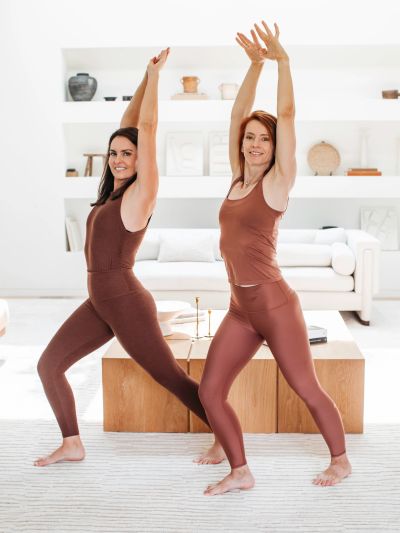
What Is the Aviva Method? A Complete Guide
By Zsofia Jamieson, co-founder of The Fertility Class and certified Aviva Method instructor, who has taught the method for 15 years. She successfully conceived with PCOS once she learned and practiced the method.
Last updated October 2026.
In short: The Aviva Method is a series of short, rhythmic, low-impact exercises developed by Aviva Steiner more than 60 years ago to support menstrual and reproductive health. It works mainly by stimulating blood flow to the pelvis and supporting hormonal and nervous system balance, and early clinical studies have measured improved uterine artery blood flow and reduced period pain after practice.
The Fertility Class is rooted in the Aviva Method, a fertility-focused movement practice created by Aviva Steiner, a Hungarian-born dancer and physiotherapist in Israel. Her method supports reproductive and hormonal health through precise, targeted movement.
Key takeaways
- It works primarily by stimulating blood flow to the ovaries and uterus, supporting hormonal regulation and calming the nervous system.
- For more than six decades, women have practiced it for irregular cycles, PCOS, endometriosis, unexplained infertility, perimenopause and pregnancy preparation.
- Scientific interest has grown in recent years, with emerging clinical evidence on its effect on pelvic blood flow and period pain.
- It is not yoga, Pilates or general fitness. It is a specific protocol of movements that reach the reproductive organs through the deep muscles of the lower abdomen, pelvis and hips.
- The Fertility Class brings the Aviva Method online as a structured, on-demand practice, so women anywhere in the world can learn it, not only those near an in-person teacher.
What is the Aviva Method?
When women look for ways to support their fertility beyond medical treatment, the search usually leads to yoga, acupuncture or general wellness advice. The Aviva Method is rarely the first thing they find, and for many of our members it is the practice they wish they had discovered years earlier.
The Aviva Method is a fertility-focused movement practice built on rhythmic, dance-like sequences that work the deep muscles of the lower abdomen, hips and pelvis. Aviva Steiner developed it in Israel in the 1960s, drawing on her training as a dancer and physical education teacher, and spent decades refining it into a precise system for women’s reproductive and hormonal health.
Unlike general exercise, the method has a specific anatomical target: the muscular and vascular network around the ovaries and uterus. The movements are designed to stimulate circulation, support hormonal signaling and bring the nervous system into a calmer state, the conditions in which ovulation and a regular cycle are most likely.
Today, women around the world practice the Aviva Method for fertility, cycle regulation, hormonal balance, perimenopausal symptoms and pregnancy preparation.
Who created the Aviva Method?
Aviva Steiner was born in Budapest in 1930 and moved to Israel in 1946. She trained in classical ballet and modern dance, earned a degree in physical education and worked as a physiotherapist’s assistant at Hadassah Hospital in the 1950s. Her method grew out of decades of close observation: how women’s bodies responded to specific movement patterns, particularly those involving the pelvis and lower abdomen, and how those patterns influenced the menstrual cycle.
In the years that followed, a generation of certified instructors carried the method forward, among them Lívia Tóth, who became one of its most devoted teachers and helped shape the method as it is practiced today. Read more about Aviva Steiner’s life and work and Lívia Tóth’s place in the lineage.
The method also belongs to a wider tradition of women’s movement practice. Adelheid Ohlig’s Luna Yoga shares some of its underlying principles and grew from the same curiosity about movement, the pelvis and the cycle. You can read our conversation with her in Adelheid Ohlig and Luna Yoga, and see where the Aviva Method fits in the longer story in The History of Fertility Exercises.
How does the Aviva Method work?
Four mechanisms sit behind the practice, and each aligns with what reproductive medicine now understands about fertility and hormonal health.
1. Pelvic blood flow
Circulation is the most central mechanism. The movements engage the deep muscles around the ovarian and uterine blood supply, encouraging blood flow to the reproductive organs. That matters because oxygen, nutrients and hormonal signals all travel through that circulation, and Doppler ultrasound research has repeatedly associated stronger pelvic blood flow with better follicle maturation, oocyte quality and implantation. We explore this in depth in The Importance of Pelvic Blood Flow for Fertility.
2. Hormonal regulation
Movement that engages the lower abdomen and pelvis reaches well beyond the muscles themselves. It supports the metabolic and endocrine systems that govern ovulation, in particular by improving insulin sensitivity and supporting the HPG axis, the hormonal cascade that drives the menstrual cycle.
3. Nervous system regulation
The rhythmic, repetitive nature of the practice has a calming effect on the nervous system. This is not a side benefit. Chronic activation of the stress response is one of the most consistent modern disruptors of ovulation, and lowering that load is a real, physiological intervention.
4. Muscular and structural support
The movements strengthen and mobilize the pelvic floor, hips and core in a way that supports reproductive and postural health, which becomes especially relevant in the months before conception and in preparation for pregnancy.
What is the Aviva Method used for?
Women have turned to the Aviva Method for a wide range of health concerns. The most common include:
- Trying to conceive, naturally or alongside IUI or IVF
- Irregular and anovulatory cycles
- PCOS, where the practice supports insulin sensitivity and ovulation
- Endometriosis-related discomfort and cycle support
- Unexplained infertility, where a standard medical workup has not found a cause
- Perimenopausal hormonal shifts, where rhythmic movement and a calmer nervous system can ease symptoms
- Pregnancy preparation, particularly in the three to six months before trying to conceive
It is not a clinical treatment, and we are careful never to present it as one. It is a movement practice that supports the body’s own capacity for hormonal balance and reproductive health, and it pairs naturally with medical care.
Is there scientific evidence for the Aviva Method?
There is emerging clinical evidence on the method itself, alongside a far larger, well-established body of research on the mechanisms it works through.
The most direct studies come from Hungary. In 2023, Kovács and colleagues measured improved uterine artery blood flow after Aviva Method exercise, and a 2024 study in Medicina found that a twice-weekly Aviva program significantly reduced menstrual pain. We summarize these studies and link to the original research on our Studies page.
The mechanisms rest on a much firmer evidence base. Decades of reproductive research support the importance of ovarian and uterine blood flow, the role of insulin sensitivity in ovulation, the link between chronic stress and hormonal regulation, and the value of mind-body practice in fertility care. The Aviva Method draws on all of them, which is part of why it has remained relevant for more than 60 years.
What does an Aviva Method class look like?
A typical class lasts about 30 minutes and is built around a sequence of low-impact, rhythmic movements for the lower abdomen, hips and pelvis. The movements look gentle and are quietly demanding to do well, particularly at first. A class generally includes:
- Warming, mobilizing movements for the lower body
- A core sequence of rhythmic movements that target the deep abdominal and pelvic muscles
- Slower, integrating movements that allow the nervous system to settle
- A closing rest
The pace is deliberate. This is not a workout in the conventional sense, and it is not meant to leave you depleted. The aim is consistent, sustainable practice, three times a week, over months.
How is the Aviva Method different from yoga, Pilates or general fitness?
We are asked this more than almost anything else, and we answer it fully in Fertility Yoga vs. Fertility Exercise. The short version:
Yoga is a broad, ancient tradition with many lineages. Some styles include fertility-supportive elements, but yoga was not designed around the female reproductive system, and the pelvis and ovaries are not its anatomical center.
Pilates is a 20th-century strength and stability practice for general core and postural health. It is excellent at what it does. It is not a fertility practice.
General fitness, including running, HIIT and weight training, has its place. For some women trying to conceive, very high-intensity exercise can suppress ovulation, which we discuss in How to Improve Egg Quality.
The Aviva Method is the only one of these designed from the beginning to support women’s reproductive and hormonal health. Its anatomical focus, intensity and rhythm all serve that single purpose.
Who is the Aviva Method for?
The method suits most women of reproductive age, including:
- Women trying to conceive, at any stage
- Women with irregular cycles, PCOS or unexplained infertility
- Women preparing for IVF or IUI who want to support their body alongside treatment
- Women in perimenopause looking for gentler hormonal support
- Women who want a sustainable movement practice designed for the female body
It is generally not recommended during pregnancy without modifications, and members who become pregnant move to our gentler prenatal classes and walking. As with any practice, women with specific medical conditions should speak with their physician before starting.
How can you learn the Aviva Method?
For most of its 60-year history, the Aviva Method was taught only by certified in-person instructors, most of them in Europe and Israel. It is one of the reasons the practice is far less known than it deserves to be.
The Fertility Class was built to change that. We teach the Aviva Method online as a structured, on-demand membership, so women anywhere in the world can learn and practice consistently. The format follows the rhythm we know supports the body, 30 minutes three times a week, with personalized onboarding and a member community alongside the classes. Learn more about the membership.
Frequently asked questions
Is the Aviva Method safe?
Yes, for most women. The practice is low-impact and gentle. Women with specific medical conditions, recent surgery or an active pregnancy should consult their physician before beginning, and we offer guidance on modifications where needed.
Can I practice the Aviva Method during my period?
Yes. You can practice throughout your cycle, including during menstruation, and The Fertility Class offers dedicated classes for each phase of the cycle.
How long until I see results?
Most members notice changes within two to three months of consistent practice, in line with the roughly 90-day window of follicle development. Consistency matters far more than intensity.
Can I do the Aviva Method alongside IVF or IUI?
In most cases, yes, with adjustments around specific procedures. Gentler practice is recommended around egg retrieval, for example, and you should always coordinate with your clinic. The Fertility Class includes phase-by-phase guidance for every stage of a treatment cycle, reviewed by our Medical Advisor. See Exercise During IVF and IUI.
Is the Aviva Method only for women trying to conceive?
No. Fertility is the most common reason women find the method, but it is also practiced for cycle regulation, PCOS, perimenopausal symptoms and general hormonal and pelvic health.
Where can I find a certified Aviva Method teacher?
For decades, certified teachers were concentrated in Europe and Israel. Through The Fertility Class, the method is now available online to women anywhere.
A practice worth knowing
The Aviva Method has quietly supported women’s reproductive health for more than 60 years. For most of that time, you had to travel to find it, taught in studios by a small network of instructors who carried it forward with great care.
Bringing it online has been the work of The Fertility Class, and we are privileged to be part of the lineage that carries it forward. If this is the first time you are hearing about it, you are exactly where many of our members began.
Sources
- Kovács, Hegyi and Szőke, Journal of Clinical Medicine, 2023: Aviva Method exercise and uterine artery blood flow
- Kovács et al., Medicina, 2024: Aviva Method exercise and primary dysmenorrhea
- Ovarian blood flow and egg quality
- Uterine blood flow and implantation
- Stress and reproductive hormone signalling
- International Aviva Method Information Center: Aviva Steiner’s legacy
More research on our Studies page